
Chatbots in B2B sales: smart helpers for more revenue
Chatbots have evolved from simple FAQ helpers into real sales assistants. We show how B2B companies use them strategically to boost efficiency, customer satisfaction and revenue.
Digitalisation is changing the way B2B companies interact with their customers. Businesses face the constant challenge of adapting to new technologies in order to stay competitive and meet their customers' needs. One technology that stands out in this context: chatbots.
Chatbots have evolved from simple automated messaging systems into sophisticated virtual assistants capable of handling complex sales tasks. In B2B, they offer companies the opportunity to streamline sales processes, increase efficiency and at the same time deliver a seamless customer experience.
But how exactly are chatbots changing B2B sales? In this article we take a closer look at how chatbots improve the sales process, what benefits they offer and how companies can integrate them effectively into their strategies.
B2B sales: digital automation vs. personal contact
It's often assumed that sales in industry happen mainly through personal contact. But is that really the case? The study "From catalogues to clicks – new paths in industrial procurement" by ECC Köln paints a more nuanced picture of buying behaviour in B2B.
The research shows: roughly half of buyers prefer fast, efficient chat exchanges – especially for simple, routine enquiries. This is where chatbots shine.
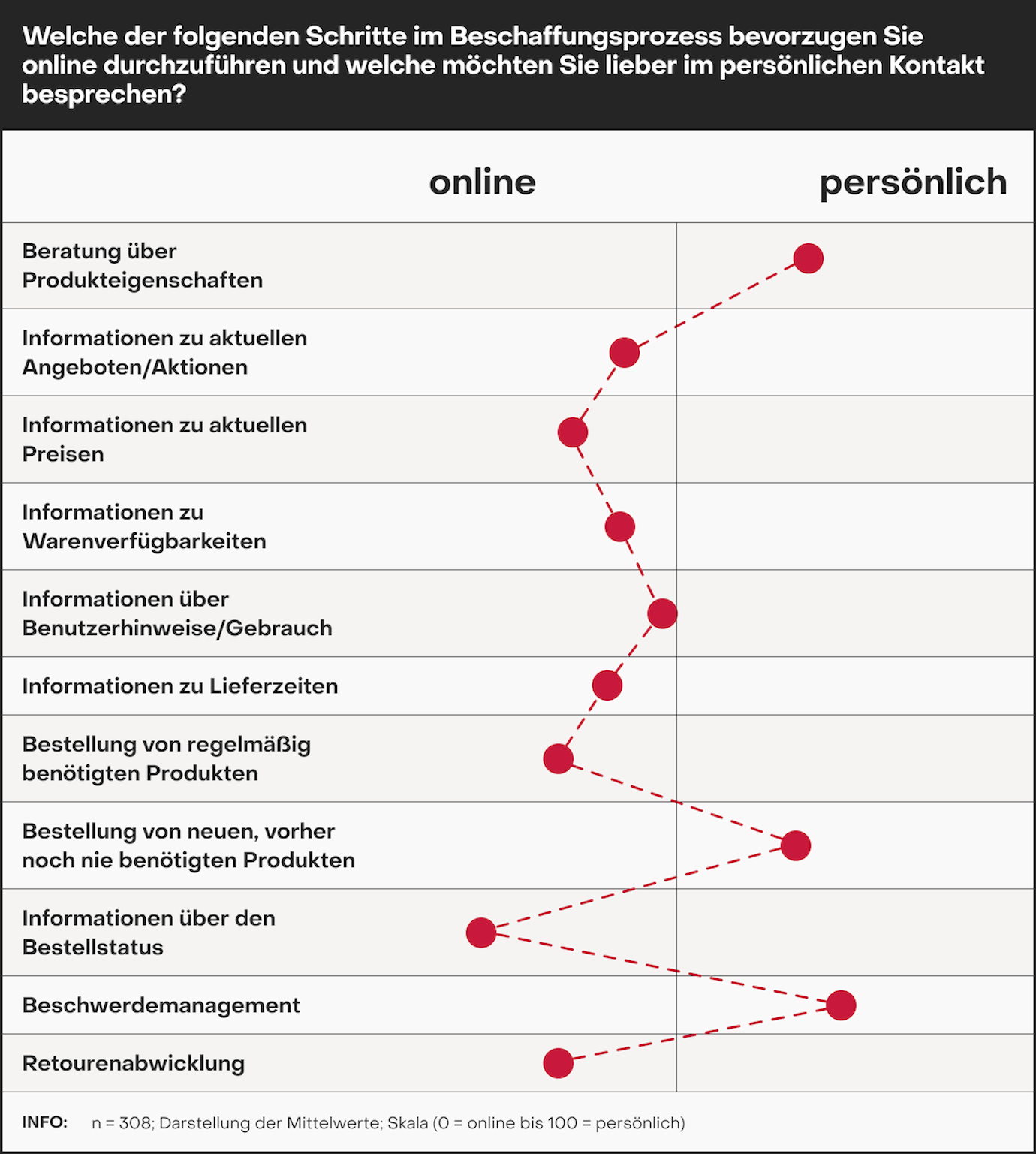
The smart bots can inform buyers quickly, efficiently and around the clock about current offers, prices, product availability, application notes and delivery times. They are also a great fit for repeat orders of regularly needed products and for order-status updates – improving the sales process for everyone involved.
Personal contact with human staff is still needed, however, for detailed product consultation, ordering new products that haven't been used before, or handling complaints.
It's all about the right balance
For B2B companies it's crucial to stay competitive in the digital future. They need to strike a balance between automated efficiency through modern technology and maintaining high-quality human customer service.
The benefits of technology must be exploited without neglecting the importance of interpersonal interaction. In the next chapter we present 10 ways B2B companies can successfully use chatbots.
10 use cases for chatbots in B2B commerce
The versatility of chatbots in B2B is impressive and gives companies many ways to optimise processes, improve customer satisfaction and ultimately drive revenue:
1) Chatbots for lead generation
Chatbots can be deployed on company websites to engage potential customers, capture their needs and generate qualified leads. They provide information about products or services, guide prospects through the sales funnel and collect contact information for the sales team.
2) Chatbots supporting sales
Chatbots can provide sales staff with relevant sales documents, deliver product information and support sales processes through automated follow-up messages to increase conversion rates.
3) Chatbots as a knowledge base for staff
Chatbots act as a knowledge base for the customer service team. While agents speak with customers, they can access stored information in real time and respond accurately.
4) Chatbots in outsourced customer service
For companies with outsourced customer support, chatbots offer an intelligent solution. External service providers can be supplied with relevant information via the bot to handle enquiries efficiently, without exposing sensitive data.
5) Chatbots for scheduling
Combined with calendar applications, chatbots can be used to book appointments with customers or business partners. They show available time slots, schedule meetings and automatically send confirmations and reminders.
6) Chatbots for order and delivery tracking
In supply chain management, chatbots can be used to take orders, check order status and track deliveries. Customers and business partners get fast, transparent visibility into the logistics process – which can lift customer satisfaction.
7) Chatbots for invoicing and payments
In financial management, chatbots can be used to create invoices, process payments and answer billing questions. They can verify payment details, send payment reminders and provide transaction histories.
8) Chatbots for personalised product recommendations
By analysing customer data and purchasing behaviour, chatbots can make personalised product suggestions. Based on past interactions they recommend relevant products or services that match the customer's needs and preferences.
9) Chatbots for feedback and surveys
Chatbots can be used to collect feedback from customers or business partners. After a business interaction they can run automated surveys to measure satisfaction, gather improvement ideas or ask specific questions that matter to the company.
10) Chatbots for training and onboarding
In employee enablement, chatbots can be used to onboard new staff or deliver training. They provide information about company policies, processes and systems, answer FAQs and offer interactive learning modules to make onboarding more efficient.
Conclusion
As digitalisation advances, the use of chatbots in B2B becomes increasingly important. From lead generation and sales support to improved customer service, digital bots offer many benefits. Integrated and used correctly, they not only increase efficiency but also lift customer satisfaction and improve employee productivity.
B2B companies that deploy chatbots strategically are well positioned to seize the opportunities of digital transformation and succeed in the long term.